
Why You Keep Firing Agencies (And Why The Next One Won't Be Different)
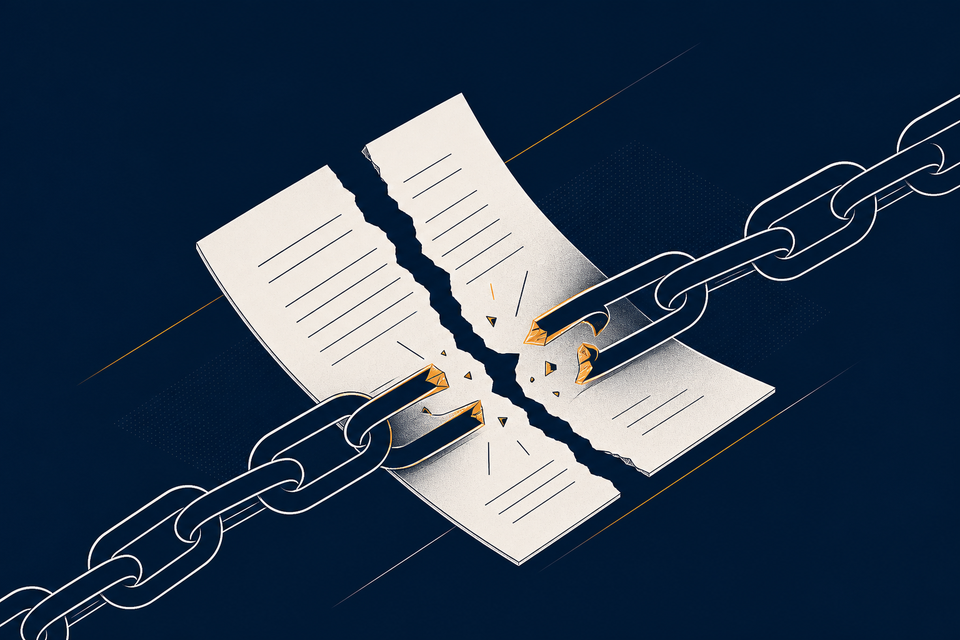
Every founder we talk to in the $2M-$10M range has the same agency story. They've hired three. They've fired two. The third one is on a 90-day window and "we'll see."
It's not bad luck. It's not a bad agency market. It's a structural mismatch between what the brand needs and what the agency is set up to sell. Until you see the mismatch, you'll keep cycling.
The pattern
The 6-month agency cycleFrom kickoff to firing — same pattern, every timeM1Kickoffaudit, deck, 90-day planM2Shipcreative + flows go liveM3Stall"still ramping"M4Doubtwho is actually doing this?M5Driftjuniors running playbooksM6Firebreakup emailThe pattern isn't bad luck. It's the agency's unit economics.
It always plays out the same way.
Month one: the agency runs a kickoff. They audit your account, they show you a deck full of "opportunities," they promise a 90-day plan. You feel good. Finally, an adult in the room.
Month two: they ship the work. New creative, new flows, new ad sets. Numbers move a little. Mostly you're looking at attribution screenshots in a Slack channel.
Month three: the dashboard hasn't really moved. The agency tells you it's "still ramping." You ask for a deeper look. They produce a longer deck.
Month four: you start to suspect the work isn't actually being driven by anyone senior. The strategist who pitched you is in three other accounts. The day-to-day is a 23-year-old running through a playbook.
Month six: you fire them. You hire the next one. The cycle restarts.
Why this is structural, not personal
Why senior brains stay junior in practiceSenior strategist$250-400Kloaded cost / year÷ 6-10accounts to be billable= 2-5 hours / month on youWhat you actually needDiagnostic answersnot channel coverageHours, not retainerspaid for outcomestooling makes it cheap
The agencies aren't lying when they say they're senior-led. Most of them genuinely intend to be. The economics just don't allow it.
A good agency strategist costs the agency $250K-$400K loaded. To make margin, that strategist has to be billable across 6-10 accounts at once. Which means real strategist time on your account is somewhere between 2 and 5 hours a month. The rest is execution by juniors using SOPs the strategist wrote two years ago.
This isn't a corner being cut. It's the only way an agency at that price point can exist. The pitch deck promises senior brains; the unit economics deliver junior hands.
The second structural issue: the agency makes money on retainer, not outcomes. Their best month and their worst month pay the same. There's no mechanism inside the contract that makes them feel your numbers the way you feel them. They feel your churn from them, which is a different signal — one that incentivizes keeping you happy enough to stay, not making you grow.
Both of these problems are invisible at the pitch. They become visible around month four, which is when you start composing the breakup email in your head.
What you actually need at this size
The work that moves a $2M-$10M brand is not the work that fits a retainer.
You need a specific question answered. Why did the September cohort drop off harder than August? Why is our second-purchase rate 22% when the category does 38%? Why did Klaviyo revenue dip 18% when we changed the welcome flow?
Those are diagnostic questions. The honest answer takes a few hours of someone who knows your stack and your category. Then you get an action — fix the welcome flow, segment the dormant 60-day cohort, change the subscription cadence on the entry SKU.
What agencies sell instead is coverage. They run all your channels. They produce a calendar. They do the QBR. They are present, every month, whether or not there's anything urgent to do. You pay for the coverage, not the answers.
For a brand under $10M, coverage is the wrong unit. You don't need someone running your channels. You need someone telling you where the leak is. Once you know where the leak is, you or your two-person internal team can patch it.
The signs you're about to fire this one too
If you're in month two or three with a new agency, the leading indicators of the next breakup are:
- The strategist you signed with is no longer the one on the weekly call.
- The agency-side reports are about activity ("we launched 14 new creatives this month") rather than outcomes ("second-purchase rate moved from 28% to 31%").
- When you ask a sharp question, the answer comes back in a deck a week later instead of a Slack message that afternoon.
- You can't tell what they did this week that you couldn't have done yourself.
If any two of those are true, you'll be firing them by month six. The cycle is already started.
What to do instead
For most brands at this size, the right shape is:
- Internal owner. One person inside the company who owns retention/lifecycle and has the keys to Klaviyo and the subscription tool. Doesn't need to be senior. Needs to be accountable.
- Fractional senior brain. A specific person (not a firm) who looks at your numbers two to four hours a month and tells your internal owner what to fix next. Paid by the hour or on a small retainer. No coverage. No QBR. Just answers.
- Tooling that makes the diagnostic cheap. The reason agencies get hired in the first place is that brands at this size can't see their own data clearly. If the diagnostic is one dashboard away instead of one agency engagement away, you don't need the agency.
The brands that get unstuck at this size almost always end up in some version of that shape. The ones that don't end up on agency four.
How Finsi fits
We built Finsi because the "tooling that makes the diagnostic cheap" piece was missing for brands under $10M. The data lives across Shopify, Recharge, and Klaviyo. The questions that matter — cohort retention, second-purchase rate, dormant segment value — require pulling those three together. No off-the-shelf dashboard does it cleanly at this size.
Finsi connects to your stack, runs the cohort math, surfaces the dormant segments, and gives your internal owner (or your fractional senior) the diagnostic they were paying the agency to do badly.
It doesn't replace strategy. It makes strategy cheap enough that you don't need to buy it on retainer.
Free 30-day trial at finsi.ai. If you're between agencies right now, this is the moment to look at your numbers cleanly before you sign the next contract — you may not need it.
Or book a 20-minute walkthrough and we'll look at your data together. No pitch deck.