
Subscription Pause Rate: 2026 Operator Guide
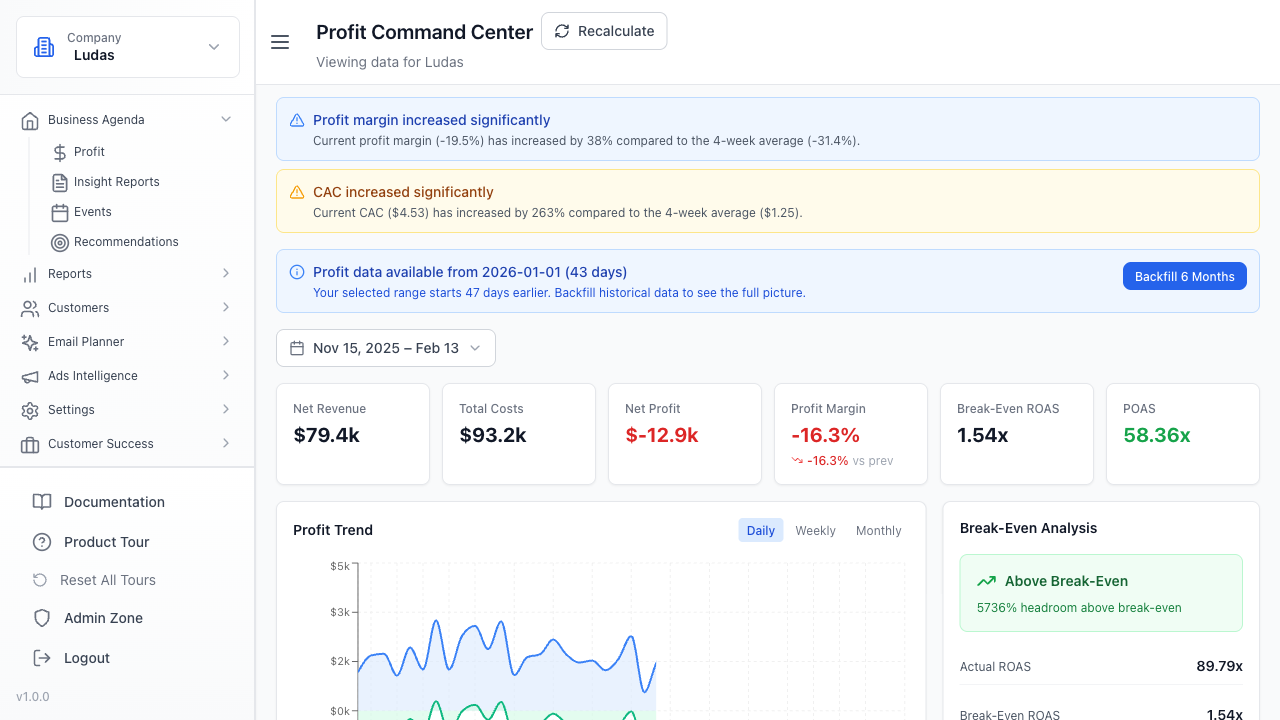
Subscription pause rate is the percentage of active subscribers who temporarily suspend their billing cycle without canceling, expressed as a monthly or cohort metric.
Why Pauses Matter More Than You Think
A pause is not a cancel. That distinction matters operationally because a paused subscriber has already proven willingness to pay, has data on file, and typically costs 5x less to reactivate than to acquire new. Yet most operators lump pauses into churn reporting or ignore them entirely.
Pauses reveal friction points: billing fatigue, seasonal demand drops, feature gaps, or price sensitivity. A subscriber who pauses is signaling 'I want this, just not now.' A subscriber who cancels is signaling 'I don't want this.' The operational response to each should be completely different.
In 2026, subscription platforms are increasingly offering pause functionality as standard. Operators who track pause rate separately gain early warning on cohort health, can segment reactivation campaigns by pause reason, and can defend churn metrics more credibly to investors. Pause rate is a leading indicator; churn is a lagging one.
Pause vs. Cancel: Definitions and Reporting
A pause is a subscriber-initiated or operator-offered suspension of billing for a defined or open-ended period, during which the subscriber remains in your database and retains account access (or partial access, depending on your model). The subscription is not terminated; it is dormant.
A cancel is permanent removal from the subscription cohort. The subscriber's billing relationship ends. In most SaaS and DTC models, a canceled subscriber must re-signup to return, incurring acquisition cost and losing historical data continuity.
Operationally, pauses should be reported separately from cancellations. Your churn metric should reflect only cancellations. Your pause rate should be its own KPI. This separation allows you to calculate true net retention (which excludes pauses) and to forecast reactivation revenue (which depends on pause rate and reactivation rate).
- Pause: billing suspended, account active, reactivation cost near zero
- Cancel: billing terminated, account inactive or deleted, reactivation cost = acquisition cost
- Report both, but never combine them into a single churn number
How to Calculate and Benchmark Pause Rate
Pause rate is calculated as: (number of subscribers who paused in period) / (average active subscribers in period) × 100. Measure this monthly and by cohort. A cohort-level pause rate shows whether newer subscribers pause more frequently than older ones, which signals onboarding or product-market fit issues.
Benchmark varies by vertical. Fitness and wellness subscriptions (Peloton, Apple Fitness+) see pause rates of 8 - 15% monthly because seasonality and life events naturally interrupt usage. SaaS tools see 2 - 5% monthly pause rates. DTC boxes and meal kits see 10 - 20% because subscribers often pause around holidays or budget cycles. Premium content (Spotify, Netflix) see sub-1% pause rates because pausing is less common than canceling.
Track pause duration as well. If the median pause is 2 weeks, reactivation is likely automatic or triggered by a simple email. If the median pause is 6+ months, you have a retention problem disguised as a pause. Pauses longer than 12 months should be reclassified as soft churn or churned.
- Formula: (paused subscribers / avg active subscribers) × 100 = pause rate %
- Measure monthly and by cohort age
- Benchmark by vertical; fitness/wellness 8-15%, SaaS 2-5%, DTC boxes 10-20%
- Track median pause duration; 6+ months signals retention risk
Pause Reasons and Segmentation
Capture pause reason at the point of pause. Reasons typically fall into four buckets: financial (can't afford right now), temporal (traveling, busy season, seasonal), product (not using it, missing features), or lifecycle (trying competitor, life change). Each reason demands a different reactivation strategy.
Financial pauses are best handled with a discount or payment plan at reactivation. Temporal pauses need a simple reminder email at the end of the pause window. Product pauses require feature education or a product update before reactivation outreach. Lifecycle pauses may not reactivate at all, but can be segmented for win-back campaigns or feedback surveys.
Operators who don't capture reason are flying blind. You can't optimize reactivation if you don't know why subscribers paused. Build pause reason into your pause flow as a required or strongly encouraged field. Use that data to segment your reactivation email campaigns and to prioritize product roadmap work.
- Financial: offer discount or payment plan at reactivation
- Temporal: send reminder email at pause end date
- Product: send feature update or education before reactivation ask
- Lifecycle: segment for win-back or feedback survey
Reactivation Rate and Revenue Recovery
Reactivation rate is the percentage of paused subscribers who resume billing within 12 months of pause. This is a critical metric because it directly impacts lifetime value. A subscriber who pauses and reactivates has higher LTV than one who never pauses, because the pause often resets their churn clock and extends their relationship.
Benchmark reactivation rates by pause reason and duration. Financial pauses reactivate at 40 - 60% if you offer a discount within 30 days. Temporal pauses reactivate at 60 - 80% if you send a reminder at the pause end date. Product pauses reactivate at 20 - 40% unless you ship a feature they requested. Lifecycle pauses reactivate at under 10%.
Calculate reactivation revenue as: (paused subscribers × reactivation rate × average revenue per user). This is recoverable revenue that most operators don't forecast. If you have 1,000 paused subscribers with a 50% reactivation rate and $15 ARPU, that's $7,500 in revenue you can expect to recover over the next 12 months. Reactivation campaigns should be budgeted as a revenue line item, not a retention expense.
- Reactivation rate: % of paused subs who resume within 12 months
- Financial pauses: 40-60% reactivation with discount offer
- Temporal pauses: 60-80% reactivation with reminder email
- Product pauses: 20-40% reactivation; depends on roadmap delivery
- Forecast reactivation revenue separately from new and expansion revenue
Reporting Pause Rate to Investors and Leadership
Pause rate is not a vanity metric, but it can be misinterpreted. Investors and CFOs may see a high pause rate and assume it's a churn problem. It's not. A high pause rate with high reactivation rate is a sign of a healthy, engaged subscriber base that trusts you enough to pause rather than cancel.
In your investor deck or board materials, report pause rate, reactivation rate, and net revenue retention as three separate lines. Show the cohort trend: are newer cohorts pausing more or less than older ones? Are pause durations getting longer? Is reactivation rate declining? These trends matter more than the absolute pause rate number.
Frame pause rate as a leading indicator of churn risk. If pause rate is rising and reactivation rate is falling, churn will rise 60 - 90 days later. If pause rate is stable and reactivation rate is rising, churn will fall. This narrative positions you as a sophisticated operator who understands subscriber behavior, not just topline metrics.
- Report pause rate, reactivation rate, and NRR as separate metrics
- Show cohort trends: are newer cohorts pausing more?
- Frame pause rate as a leading indicator of future churn
- High pause rate + high reactivation = healthy engagement, not churn
Reducing Pause Rate Through Product and Operations
Pause rate is a lever you can pull. High pause rates often signal that subscribers are hitting a friction point before they're ready to cancel. Reducing pause rate means addressing that friction earlier.
Common levers: offer a pause option before a cancel option (many subscribers will pause if given the choice). Implement automatic reactivation after a set period (30 - 60 days) unless the subscriber opts out; this converts pauses into temporary dips rather than long-term dormancy. Segment by pause reason and send targeted reactivation campaigns 2 - 3 weeks before the pause ends. Add a 'pause instead of cancel' prompt to your cancellation flow.
On the product side, high pause rates often correlate with low engagement or missing features. Use pause reason data to inform your roadmap. If 30% of pauses are product-related, prioritize those features. If 40% are financial, consider a lower-tier plan or payment plan option. Pause rate is a diagnostic tool; use it.
- Offer pause before cancel in UI flows
- Implement automatic reactivation after 30-60 days (opt-out model)
- Send targeted reactivation campaigns 2-3 weeks before pause end
- Use pause reason data to prioritize product roadmap
- Consider lower-tier plan or payment plan to reduce financial pauses
FAQ
Should I include pauses in my churn calculation?
No. Churn should reflect only cancellations. Pauses are a separate metric. If you combine them, you'll overstate churn and miss the reactivation revenue opportunity. Report pause rate and churn rate as two distinct KPIs.
What's a good pause rate?
It depends on your vertical. Fitness and wellness typically see 8 - 15% monthly pause rates. SaaS tools see 2 - 5%. DTC boxes see 10 - 20%. The trend matters more than the absolute number. If pause rate is rising while reactivation rate falls, that's a warning sign. If pause rate is stable or rising with stable or rising reactivation, that's healthy.
How do I calculate the revenue impact of pauses?
Multiply paused subscribers by reactivation rate by average revenue per user. Example: 1,000 paused subs × 50% reactivation rate × $15 ARPU = $7,500 recoverable revenue. This should be forecasted as a separate revenue line item and tracked against actual reactivation.
What's the difference between a pause and a failed payment?
A pause is intentional and subscriber-initiated (or offered by you). A failed payment is involuntary and typically results in a retry loop, dunning emails, and eventual churn if not recovered. Track them separately. Failed payments are a payment operations issue; pauses are a retention and engagement issue.
FAQ
Should I include pauses in my churn calculation?
No. Churn should reflect only cancellations. Pauses are a separate metric. If you combine them, you'll overstate churn and miss the reactivation revenue opportunity. Report pause rate and churn rate as two distinct KPIs.
What's a good pause rate?
It depends on your vertical. Fitness and wellness typically see 8 - 15% monthly pause rates. SaaS tools see 2 - 5%. DTC boxes see 10 - 20%. The trend matters more than the absolute number. If pause rate is rising while reactivation rate falls, that's a warning sign. If pause rate is stable or rising with stable or rising reactivation, that's healthy.
How do I calculate the revenue impact of pauses?
Multiply paused subscribers by reactivation rate by average revenue per user. Example: 1,000 paused subs × 50% reactivation rate × $15 ARPU = $7,500 recoverable revenue. This should be forecasted as a separate revenue line item and tracked against actual reactivation.
What's the difference between a pause and a failed payment?
A pause is intentional and subscriber-initiated (or offered by you). A failed payment is involuntary and typically results in a retry loop, dunning emails, and eventual churn if not recovered. Track them separately. Failed payments are a payment operations issue; pauses are a retention and engagement issue.