
Recharge vs Skio (2026): What the $105M Acquisition Changed for Shopify Brands
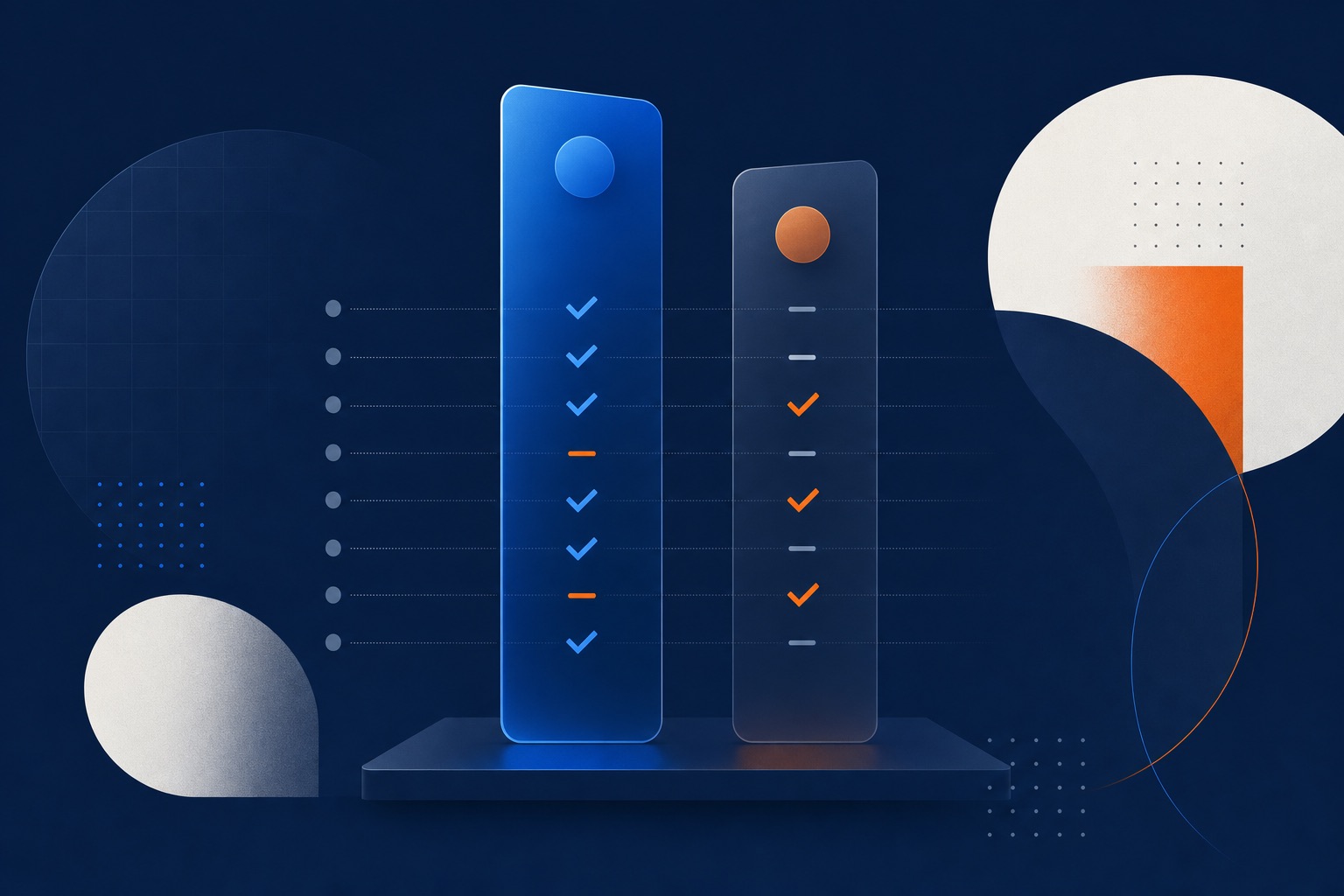
In April 2026 Recharge acquired Skio for USD 105 million, which changes the Recharge-versus-Skio question fundamentally: they are no longer independent competitors, but two products under one company. A brand comparing them today is not weighing two rival roadmaps against each other - it is choosing between two Recharge-owned platforms, and the considerations that used to separate them have shifted.
Before the acquisition, the comparison was straightforward. Recharge was the broad incumbent with the deepest ecosystem; Skio was the challenger that won on checkout experience, with passwordless login and a fast native flow that larger, high-volume merchants adopted specifically for conversion. The independent-roadmap risk cut both ways - Skio might out-innovate Recharge, or might not survive it. The acquisition resolved that question by absorption.
This guide covers what the acquisition changed for brands currently on Skio, how to think about choosing between the two now, and where the real subscription-platform decision has moved.
What separated them before
The pre-acquisition distinction was clear and still describes the products' strengths.
| Recharge | Skio | |
|---|---|---|
| Position | Broad incumbent | Checkout-first challenger |
| Signature strength | Ecosystem and integration depth | Passwordless, frictionless native checkout |
| Typical adopter | Brands wanting breadth and low risk | Larger merchants optimizing subscription conversion |
| Pricing | $99/mo + 1.49% + 19c (Starter) | Premium, roughly $299-599/mo |
Skio's edge was conversion. A passwordless, native checkout reduces the friction where subscription sign-ups are won or lost, and for a high-volume brand a small conversion improvement justifies a premium platform. Recharge's edge was everything around the subscription: the integrations, the tooling, the safety of the market leader.
What the acquisition changed
Three things shifted when Recharge absorbed Skio.
The independent-roadmap consideration disappeared. Choosing Skio for its trajectory as an independent challenger no longer makes sense, because it is now a Recharge product on a Recharge roadmap. Its checkout strengths remain, but the strategic bet on it as a rival to Recharge is moot.
The consolidation reduced the independent field to two. After the deal, the genuinely independent Shopify subscription platforms are Recharge and Loop, with Stay.ai as the retention specialist. A brand that specifically wanted an alternative to Recharge has one fewer to consider, which raises the relative importance of Loop and Stay.ai in that search.
Support and continuity became a question. Acquisitions consolidate teams and roadmaps over time. A brand currently on Skio should watch how Recharge integrates the two products - whether Skio remains a distinct offering or converges into Recharge - because that determines migration risk down the line.
Choosing between them now
For a brand deciding today, the practical question is narrower than it was: within the Recharge family, is Skio's checkout experience worth its premium over Recharge Starter?
If subscription checkout conversion is a measurable constraint - if the brand can point to sign-up drop-off at checkout - then Skio's frictionless flow is its reason to exist, and the premium buys a conversion improvement. If checkout is not the binding constraint, Recharge Starter delivers the ecosystem at a lower fee, and the Skio premium buys capability the brand will not use.
The decision that used to be Recharge versus Skio is now closer to Recharge versus Recharge-premium-checkout, with the same company standing behind both.
Where the real decision moved
The acquisition pushed the more interesting comparison outward. A brand that wanted a genuine alternative to Recharge should now be comparing Recharge against Loop and Stay.ai - the platforms still independent of it - rather than against Skio, which is no longer independent.
Loop is the other major independent, without a per-order flat fee on its paid tiers. Stay.ai is the retention specialist, built to reduce churn rather than report it. Those are the live alternatives to the Recharge ecosystem now, and the full comparison is in best Shopify subscription apps.
The number that outlasts the platform choice
Whichever platform a brand lands on, the metric that determines whether it is worth the fee is the same, and no subscription platform reports it fully: how much of your churn is involuntary versus voluntary, and what the platform's retention and checkout tooling is actually recovering against your subscriber base. That sits in subscription and payment data, not in any app's dashboard.
Finsi computes it across Recharge, Skio, Stay.ai, or Loop - as the analytics layer on top of whichever platform you run, measuring the decision rather than competing in it.
Related reading: Recharge pricing and fees and best Shopify subscription apps.
Andrei Rebrov is Co-CEO of Finsi, where he builds AI-powered analytics for subscription and DTC e-commerce. He writes on subscription economics, LTV modeling, cohort analysis, and retention metrics.