
Hiring Your First Growth Analyst: Scope, Skills, and the AI Operator Split
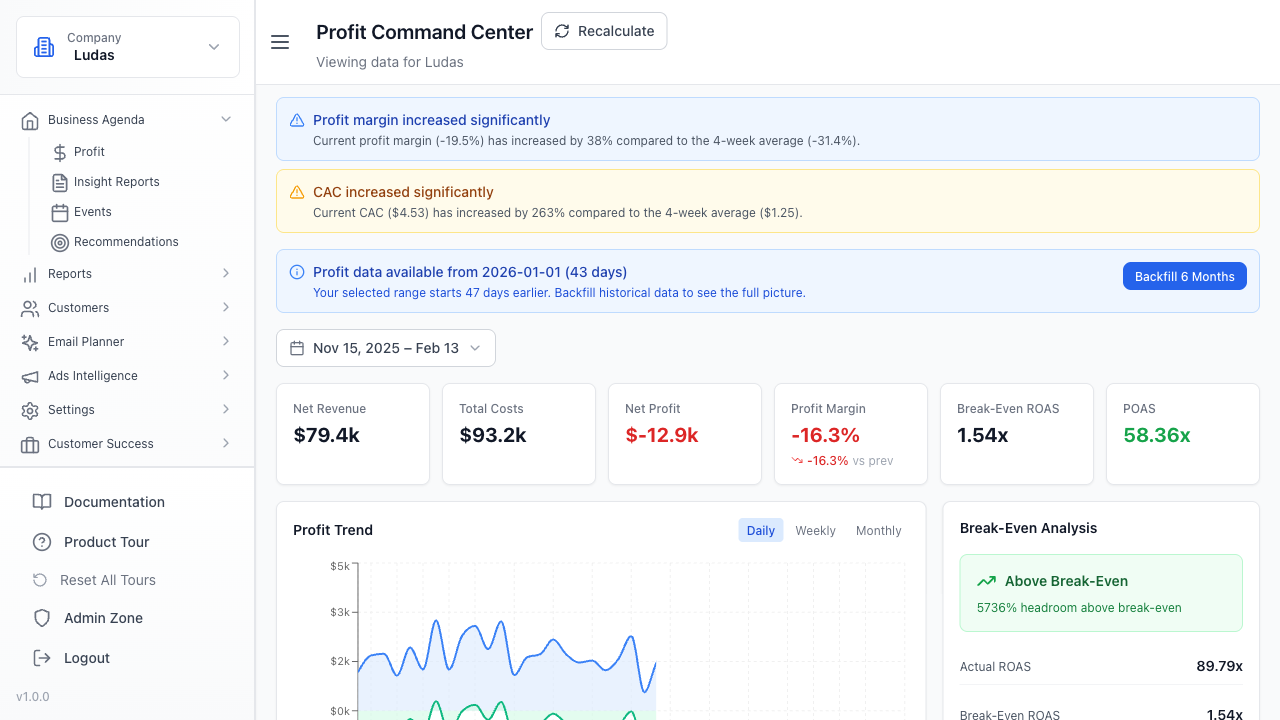
A growth analyst owns measurement infrastructure, cohort analysis, and statistical rigor to inform product and marketing decisions—distinct from an operator using AI tools to execute campaigns.
Why You Need a Growth Analyst (Not Just an Operator with AI)
Most early-stage DTC founders assume one person can do everything: run campaigns, analyze data, optimize funnels, and manage tools. AI has made that assumption more seductive. A founder or operator armed with ChatGPT, Claude, and a Shopify dashboard can move fast and ship changes daily. But speed without measurement is drift.
A growth analyst is not an operator who uses AI better. An analyst owns the infrastructure that tells operators whether their work is actually working. That distinction matters because operators optimize for velocity and conversion in the moment. Analysts optimize for signal clarity and long-term causality. An operator might A/B test email subject lines and declare a winner after 500 opens. An analyst asks: is that lift real, or noise? Will it hold across cohorts? What's the 90-day retention impact?
The split becomes critical around month 6-12 of growth, when you have enough traffic to see patterns but not enough clarity to trust them. That's when hiring a first analyst pays for itself—by preventing expensive mistakes and unlocking leverage from your operator team.
Core Responsibilities: The Analyst Job Scope
A first growth analyst typically owns four buckets: instrumentation, cohort analysis, experimentation rigor, and reporting cadence. These are not glamorous, but they are the foundation of repeatable growth.
Instrumentation means ensuring every customer touchpoint is tracked consistently. That includes event naming conventions, property schemas, and validation logic. An operator might fire a 'purchase' event; an analyst ensures that event includes product category, discount source, device type, and cohort ID so future analysis is possible. Without this, downstream insights are worthless.
Cohort analysis is the analyst's primary output. Retention curves by acquisition channel, LTV by first-order value, repeat purchase rates by product type, churn triggers by customer segment - these are the questions analysts answer. Operators use these answers to decide where to spend. An analyst builds the SQL, validates the math, and documents assumptions so the same question asked in three months yields the same answer.
Experimentation rigor prevents false positives. Most operators run tests but few calculate minimum sample size, statistical power, or interaction effects. An analyst designs experiments, sets stopping rules, and interprets results in context. This is where the analyst and operator overlap most - but the analyst is the gatekeeper on what counts as a win.
Reporting cadence keeps the team aligned. Weekly dashboards, monthly deep dives, quarterly trend reviews - the analyst owns the calendar and the narrative. This is not busy work. Consistent reporting surfaces anomalies early and builds institutional memory about what worked and why.
What an Analyst Is Not: The Operator Boundary
An analyst does not execute campaigns, manage ad accounts, or run daily optimizations. Those are operator tasks. An operator uses AI to write ad copy, test landing page variants, and adjust bids. An analyst uses data to tell the operator which channels are worth scaling and which are decaying.
This boundary prevents role creep and keeps both functions sharp. An analyst who spends 30% of their time running reports in Shopify admin is not building infrastructure. An operator who spends 30% of their time validating statistical significance is not moving fast enough.
In practice, the boundary is porous. An analyst might write a SQL query that an operator uses daily. An operator might flag a cohort anomaly that triggers an analyst investigation. But the primary accountability is clear: analyst owns the truth, operator owns the action.
For founders hiring their first analyst, this distinction also clarifies hiring criteria. You are not looking for someone who can do everything. You are looking for someone who can build systems that make operators more effective.
Hiring Rubric: What to Look For
A first growth analyst needs three core skills: SQL fluency, statistical literacy, and communication clarity. Technical depth in one of these is better than surface competence in all three.
SQL fluency means writing joins, aggregations, and window functions without Googling. The analyst should be able to pull raw event data, validate it, and transform it into a cohort table in under an hour. This is the baseline. If an analyst cannot write SQL, they are dependent on engineers for every question, which kills velocity.
Statistical literacy does not mean a PhD. It means understanding sample size, variance, correlation vs. causation, and the difference between median and mean. An analyst should be able to calculate a 95% confidence interval, spot Simpson's Paradox, and explain why a test with p = 0.06 is not a win. This prevents the operator from acting on noise.
Communication clarity is underrated. An analyst can build perfect cohort tables and still fail if they cannot explain what the data means in 30 seconds. Look for candidates who can write clear email summaries, present findings without jargon, and anticipate operator questions. In interviews, ask them to explain a past analysis to a non-technical founder. If they default to dashboards and charts instead of a narrative, that is a red flag.
Experience matters less than aptitude. A former analyst at a larger company might be overqualified and slow. A sharp operator or engineer who has built dashboards and asks good questions about data might be perfect. Look for intellectual curiosity about causality, not resume pedigree.
- Can they write SQL without external help? Ask them to write a query on the spot.
- Do they ask about sample size and statistical power when you describe a test? That is a good sign.
- Can they explain a past project in plain English? If not, communication is a gap.
- Have they built dashboards or reports before? Bonus if they have used dbt or similar tools.
- Do they care about data quality and validation? That mindset prevents downstream disasters.
Structuring the First Analyst Role
The first analyst should report to the founder or head of growth, not engineering. This ensures the analyst's priorities align with business questions, not technical debt. An analyst buried in the engineering org will spend cycles on infrastructure that operators do not need.
Start with a narrow scope: one product line, one primary channel, one key metric. The goal is to build one cohort analysis and one experiment framework that works, then expand. An analyst trying to instrument the entire business on day one will drown.
Pair the analyst with your best operator for the first month. The operator knows what questions matter. The analyst learns the business context. This pairing also prevents the analyst from building elegant solutions to unimportant problems.
Set a 90-day milestone: a weekly dashboard that the team trusts, one major cohort finding that changes strategy, and one experiment framework that the operator uses without friction. If the analyst hits those, you have the right person. If not, you have clarity on what is missing.
The AI Operator Advantage (And Its Limits)
AI tools have made operators dramatically more productive. An operator with Claude can write email sequences, design landing pages, and optimize copy in hours instead of weeks. This is real leverage.
But AI does not replace measurement. An operator using AI to generate 100 ad variants is still guessing which one works without cohort data. An operator using AI to write retention emails is still flying blind without churn analysis. AI accelerates execution. Analysis accelerates learning.
The best DTC teams have both: an operator using AI for velocity, and an analyst using data for direction. The operator moves fast. The analyst makes sure fast is not just noise. Together, they compound.
For founders deciding between hiring an analyst or investing in AI tools for operators, the answer is both - but sequence matters. If you have less than $50K MRR and one operator, invest in AI tools first. If you have $100K+ MRR and multiple operators, hire an analyst. The analyst becomes more valuable as the team scales because they prevent expensive mistakes and unlock leverage across multiple operators.
Red Flags and Deal-Breakers
Avoid candidates who treat analysis as a reporting function. An analyst who says 'I build dashboards' is not a growth analyst. A growth analyst says 'I find insights that change decisions.' Dashboards are output, not purpose.
Avoid candidates who cannot explain statistical concepts in plain English. If they hide behind jargon, they will not communicate with operators. If they cannot defend a methodology simply, they do not understand it.
Avoid candidates who have never worked in a fast-moving environment. A former analyst at a Fortune 500 company might be brilliant but slow. Growth analysis requires shipping fast, learning from mistakes, and iterating. If a candidate has only worked in slow orgs, they may struggle with the pace.
Avoid candidates who are not curious about the business. An analyst who asks 'what metrics do you want?' instead of 'what decisions are you trying to make?' will build the wrong things. Look for someone who asks why, not just what.
FAQ
Can an operator learn to be an analyst, or should I hire externally?
An operator with SQL skills and curiosity about causality can transition into analysis. The risk is that they retain operator habits - moving too fast, trusting intuition over rigor. If you have an operator who loves data and asks good questions, invest in training them. If you do not, hire externally. A fresh analyst brings no bad habits and can set the standard for rigor from day one.
What tools should a first analyst use?
Start with what you have. If you use Shopify, Klaviyo, and Google Analytics, the analyst should master those first. Then add a data warehouse (Snowflake, BigQuery, or Postgres) and a BI tool (Metabase or Looker). SQL is the only non-negotiable. Everything else is secondary. An analyst who knows SQL can work in any tool. An analyst who only knows Looker is stuck when you switch tools.
How much should I pay a first growth analyst?
At $100K - $500K ARR, expect to pay $60K - $85K for a junior analyst with SQL skills and statistical literacy. At $500K - $2M ARR, expect $85K - $120K. These are market rates for US-based hires. The best predictor of salary is not experience but skill - someone who can write SQL and design experiments is worth more than someone with a fancy title and no hands-on ability.
Should my first analyst be full-time or contract?
Full-time. A contract analyst will optimize for billable hours and deliverables, not for building institutional knowledge or preventing future mistakes. Growth analysis is a long-term function. You want someone who cares about the business, not just the project. Hire full-time, even if it is part-time hours initially. The commitment matters.
FAQ
Can an operator learn to be an analyst, or should I hire externally?
An operator with SQL skills and curiosity about causality can transition into analysis. The risk is that they retain operator habits - moving too fast, trusting intuition over rigor. If you have an operator who loves data and asks good questions, invest in training them. If you do not, hire externally. A fresh analyst brings no bad habits and can set the standard for rigor from day one.
What tools should a first analyst use?
Start with what you have. If you use Shopify, Klaviyo, and Google Analytics, the analyst should master those first. Then add a data warehouse (Snowflake, BigQuery, or Postgres) and a BI tool (Metabase or Looker). SQL is the only non-negotiable. Everything else is secondary. An analyst who knows SQL can work in any tool. An analyst who only knows Looker is stuck when you switch tools.
How much should I pay a first growth analyst?
At $100K - $500K ARR, expect to pay $60K - $85K for a junior analyst with SQL skills and statistical literacy. At $500K - $2M ARR, expect $85K - $120K. These are market rates for US-based hires. The best predictor of salary is not experience but skill - someone who can write SQL and design experiments is worth more than someone with a fancy title and no hands-on ability.
Should my first analyst be full-time or contract?
Full-time. A contract analyst will optimize for billable hours and deliverables, not for building institutional knowledge or preventing future mistakes. Growth analysis is a long-term function. You want someone who cares about the business, not just the project. Hire full-time, even if it is part-time hours initially. The commitment matters.