
How to Build a Weekly Growth Brief in 20 Minutes
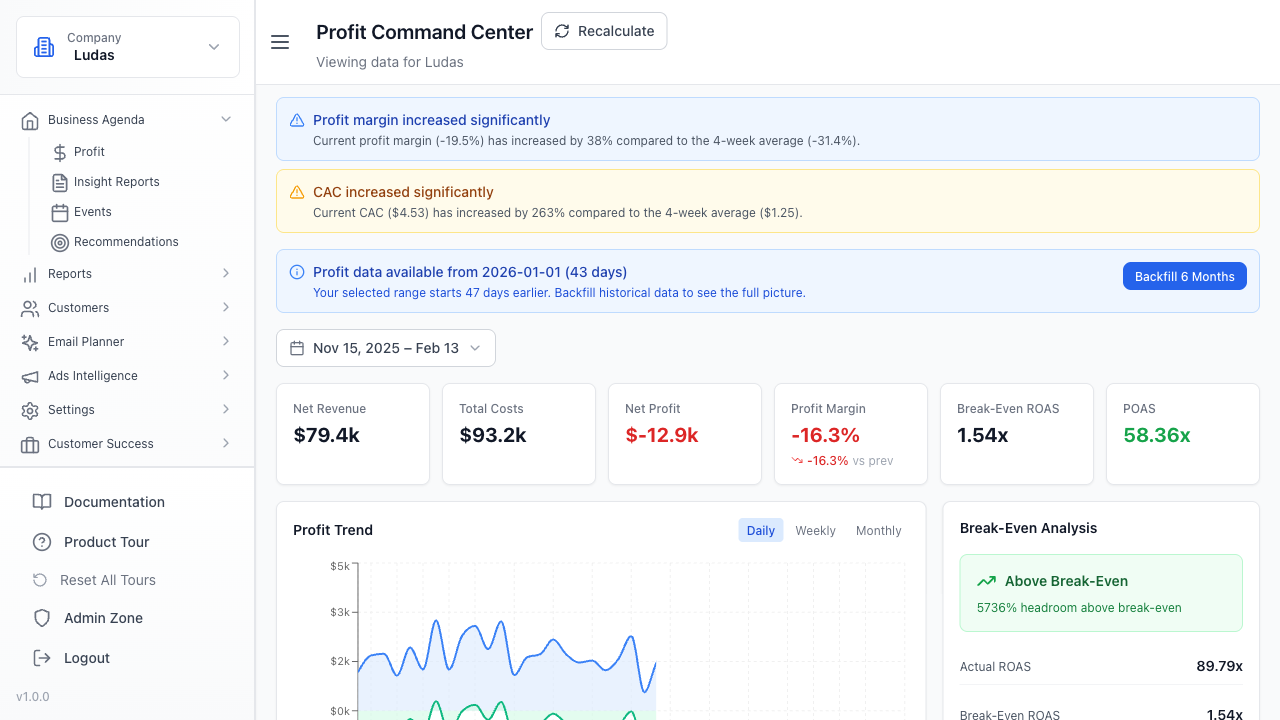
A weekly growth brief is a time-boxed, operator-owned summary of key metrics, wins, blockers, and next actions distributed to stakeholders every Monday or Friday.
Why 20 Minutes Matters
A weekly growth brief that takes two hours to produce is a brief that won't ship. Operators know this. The moment the brief becomes a production burden, it either gets deprioritized or balloons into a deck that no one reads past slide three.
The 20 minute constraint forces clarity. It kills the urge to add context nobody needs, to hedge every statement, or to include metrics that don't move the needle. Brevity is a feature, not a limitation. Teams that ship weekly briefs in 20 minutes tend to act faster on findings because the signal-to-noise ratio stays high.
This timeline assumes the data is already accessible - not buried in five different tools. If you're spending 15 minutes just pulling numbers, the brief itself becomes a data engineering project. That's a separate problem to solve first.
Core Template: Five Sections
A functional growth brief needs exactly five sections. More than that and you're writing a report. Fewer and you're missing decision-making context.
Start with a one-line headline that captures the week's narrative. Not 'Weekly Update' - something like 'AOV up 8%, but checkout drop-off increased 3%'. This forces the author to synthesize the story before writing.
The template breaks down as: headline, key metrics (3 - 5 numbers only), wins (what worked), blockers (what didn't), and next week's priorities. Each section should be scannable in under 30 seconds. Use short sentences. No paragraphs.
- Headline: One sentence capturing the week's net story
- Metrics: 3 - 5 KPIs only (revenue, conversion rate, CAC, LTV, retention - whatever your north star is)
- Wins: 2 - 3 concrete wins with owner names and impact
- Blockers: 1 - 2 real blockers with owner assigned and deadline
- Next Week: 2 - 3 priorities with owner and success metric
Ownership and Accountability
Assign an owner to the brief itself - usually the growth lead or head of marketing. That person is responsible for shipping it by Friday EOD or Monday 9am, no exceptions. No owner means it never ships.
Within the brief, every win and blocker needs a name attached. Not 'the team improved email CTR' but 'Sarah's email test lifted CTR 12%'. Names create accountability and make it clear who to ask follow-up questions.
Rotate the brief ownership quarterly if you have a larger team. This prevents the brief from becoming a one-person bottleneck and forces multiple operators to think systematically about growth. It also surfaces different priorities depending on who's writing.
The brief should go to the same distribution list every week - usually the exec team, growth team, and product. No surprises about who gets it. If someone new asks to be added, add them, but the default list stays static.
What to Cut
Cut any metric that doesn't inform a decision this week or next. Historical context is fine in a monthly review. Weekly briefs are forward-looking. If a number is 'down 2% but within normal variance', it doesn't belong in the brief.
Cut explanations that sound like excuses. 'Traffic was down because of iOS privacy changes' is context, not a brief item. If iOS changes are blocking growth, that's a blocker. If they're just noise, leave it out.
Cut competitor benchmarks unless they directly change your strategy this week. Knowing Competitor X has 35% conversion rate is trivia. Knowing they launched a feature that's converting 40% better and you need to respond is a blocker.
Cut deck slides that duplicate what's in the text. If the metrics section lists revenue, don't add a chart showing revenue. One format per insight. Operators reading a brief want density, not repetition.
Cut anything longer than two sentences per bullet point. If you need more explanation, you're writing a memo, not a brief. Save the deep dives for Slack threads or office hours.
Timing and Cadence
Ship the brief the same day every week. Friday EOD or Monday 9am - pick one and stick with it. Consistency matters more than which day. Teams that ship Monday mornings tend to see faster action because priorities are fresh.
Set a hard deadline for input. If you're collecting wins and blockers from five people, close the input window by Thursday 2pm for a Friday brief. After that, you work with what you have. No one waits for the perfect data.
Review the brief in a 15 minute standup if the team is distributed, or skip the meeting if the brief is clear enough to stand alone. Many teams don't need a sync - the brief does its job asynchronously.
Archive every brief in a shared folder or wiki. This creates a searchable record of what the team prioritized and what actually moved. Six months of briefs is a better retrospective than any quarterly review.
Common Pitfalls
The brief becomes a vanity project. Operators start adding slides about brand sentiment or market share because it looks impressive. Resist this. The brief's job is to move the business, not to look polished.
Metrics drift. Week one you track CAC, week three you add LTV, week five you add payback period. Pick your core metrics and don't change them for at least a quarter. Consistency in measurement is how you spot real trends.
Blockers never get resolved. If the same blocker appears three weeks in a row with no progress, that's a signal that either the owner isn't empowered or the blocker isn't real. Address it in a separate conversation, not in the brief.
The brief becomes a status report instead of a decision tool. If the brief is just 'here's what happened', it's not driving action. Every win should have a follow-up (do it again, double down, scale it). Every blocker should have an owner and a deadline to resolve it.
Scaling the Brief
As the team grows, the brief doesn't need to get longer. It needs to get more selective. A 50-person company doesn't need 50 metrics in the brief. It needs the 5 that matter most.
If you have multiple growth channels (paid, organic, email, retention), assign one person per channel to own the metrics and one person to synthesize them into a single brief. This keeps the brief tight and prevents channel owners from over-reporting.
For multi-product companies, run separate briefs per product or one consolidated brief with a section per product. Test both for a month and see which one drives faster decisions. Most teams find one consolidated brief works better because it forces trade-off conversations.
The brief format stays the same whether you're a $1M or $100M company. The metrics change, the owners change, the priorities change. The structure doesn't.
FAQ
What if we don't have clean data to pull metrics from?
Start with whatever you can measure reliably in your current tools. If that's just revenue and traffic, start there. Add metrics as your data infrastructure improves. A brief with 3 clean numbers beats a brief with 10 messy ones. The brief will actually motivate you to fix your data stack because you'll feel the pain of missing context every week.
Should the brief include forward-looking projections or just actuals?
Actuals only. Projections belong in quarterly planning or board decks. The brief's job is to report what happened and decide what's next based on real data. If you're projecting revenue based on this week's trend, you're guessing. Stick to what you know.
How do we handle weeks where nothing moved or everything broke?
Ship the brief anyway. A flat week is still data - it tells you that your experiments didn't move the needle or that your baseline is stable. A broken week is a blocker week. The brief still ships, and the blockers get priority. Consistency matters more than having a 'good' story every week.
Can the brief be async-only or does it need a meeting?
Async-only is better if the brief is clear and actionable. Most teams don't need a sync. If you find yourself explaining the brief in a meeting every week, the brief itself isn't clear enough. Rewrite it. If you do sync, keep it to 15 minutes max - just clarify blockers and next week's priorities, then move on.
FAQ
What if we don't have clean data to pull metrics from?
Start with whatever you can measure reliably in your current tools. If that's just revenue and traffic, start there. Add metrics as your data infrastructure improves. A brief with 3 clean numbers beats a brief with 10 messy ones. The brief will actually motivate you to fix your data stack because you'll feel the pain of missing context every week.
Should the brief include forward-looking projections or just actuals?
Actuals only. Projections belong in quarterly planning or board decks. The brief's job is to report what happened and decide what's next based on real data. If you're projecting revenue based on this week's trend, you're guessing. Stick to what you know.
How do we handle weeks where nothing moved or everything broke?
Ship the brief anyway. A flat week is still data - it tells you that your experiments didn't move the needle or that your baseline is stable. A broken week is a blocker week. The brief still ships, and the blockers get priority. Consistency matters more than having a 'good' story every week.
Can the brief be async-only or does it need a meeting?
Async-only is better if the brief is clear and actionable. Most teams don't need a sync. If you find yourself explaining the brief in a meeting every week, the brief itself isn't clear enough. Rewrite it. If you do sync, keep it to 15 minutes max - just clarify blockers and next week's priorities, then move on.