
Best Customer Retention Software for E-commerce (2026): 10 Tools Compared
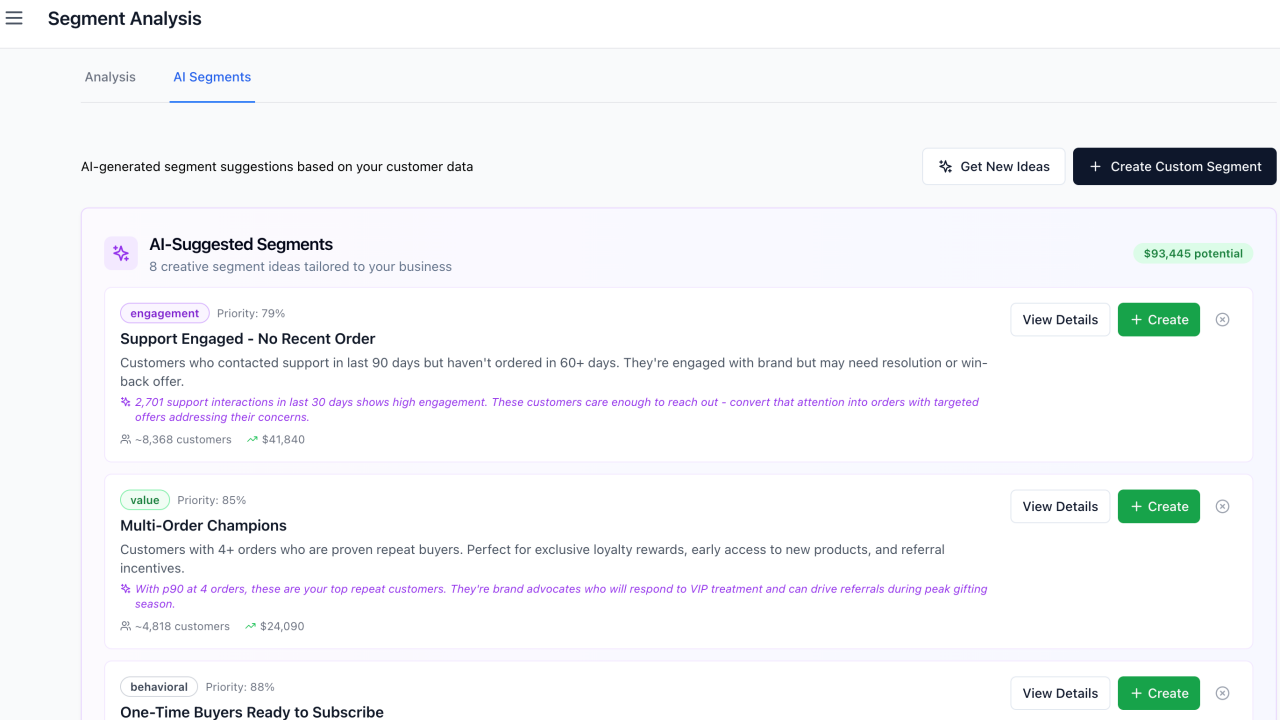
The best customer retention software for e-commerce in 2026 combines data analytics, automated engagement, and actionable insights to reduce churn and increase customer lifetime value. After evaluating the leading platforms, the top tools fall into four categories: retention analytics, loyalty and engagement, customer support, and subscription management - and the strongest retention strategies use tools from multiple categories working together.
This guide compares 10 leading retention tools across these categories, covering what each does, its key retention features, ideal use cases, and pricing, so you can build the right retention stack for your e-commerce business.
Retention Software Categories
Before diving into individual tools, it helps to understand the four main categories of customer retention software and how they work together:
Retention analytics platforms provide the data foundation - cohort analysis, churn prediction, customer health scoring, and LTV modeling. They tell you who is at risk, why, and what to do about it.
Loyalty and engagement platforms create incentives for customers to stay and spend more - points programs, referral systems, VIP tiers, and rewards. They increase switching costs and emotional attachment.
Customer support platforms protect retention at the point of friction - when something goes wrong. Fast, personalized support resolution prevents experience-driven churn.
Subscription management platforms handle the mechanics of recurring commerce - billing, dunning, subscription flexibility, and payment recovery. They reduce involuntary churn and provide customers with alternatives to cancellation.
The most effective retention strategies layer tools from each category. Analytics identifies who is at risk. Loyalty and engagement keep engaged customers engaged. Support catches customers at risk of experience-driven churn. Subscription management prevents mechanical churn from failed payments.
The 10 Best Customer Retention Tools for E-commerce
Retention Analytics Platforms
1. Finsi
Finsi is an AI-powered retention intelligence platform built specifically for e-commerce brands. It stands out from traditional analytics tools by prioritizing recommendations over dashboards - instead of presenting data and expecting users to find insights, Finsi surfaces a ranked list of what matters now and what to do next.
Key retention features:
- AI recommendations engine that prioritizes retention actions by expected revenue impact
- Predictive churn scoring that identifies at-risk customers before they cancel
- Cohort analysis and LTV modeling with real-time data from Shopify, Recharge, Klaviyo, and 50+ integrations
- Smart customer segmentation with natural language queries
- AI-powered dunning for failed payment recovery
- Win-back campaign intelligence with optimal timing and offer recommendations
- Profit intelligence with real-time P&L tied to customer-level economics
Best for: Growth-stage e-commerce brands ($1M-$50M) that want a single platform covering retention analytics, churn prediction, customer segmentation, and AI-powered recommendations. Particularly strong for brands that want to move from reactive to proactive retention.
Pricing: Custom pricing based on business size. Free pilot available.
2. Peel Insights
Peel Insights focuses on automated analytics for Shopify-based DTC brands, with strong cohort analysis and customer behavior reporting.
Key retention features:
- Automated cohort analysis and retention curves
- Customer LTV reporting by acquisition source, product, and segment
- Repurchase rate tracking and predictions
- Product-level analytics showing which products drive repeat purchases
- Market basket analysis for cross-sell optimization
- Audience sync to ad platforms for retention-focused targeting
Best for: Shopify-native DTC brands that want accessible retention analytics without complex setup. Strong for brands focused on understanding repurchase behavior and product-level retention patterns.
Pricing: From $149/month for smaller stores. Scales with order volume.
Loyalty and Engagement Platforms
3. Smile.io
Smile.io is one of the most popular loyalty platforms for e-commerce, powering points and rewards programs for thousands of online stores.
Key retention features:
- Points programs (earn and redeem on purchases, social actions, birthdays)
- VIP tier programs with escalating benefits
- Referral programs with customizable rewards
- Branded rewards portal integrated into the storefront
- Shopify, BigCommerce, and Wix integrations
- Analytics on loyalty program performance and member lifetime value
Best for: Small to mid-size e-commerce brands launching their first loyalty program. Low barrier to entry with pre-built program templates. Strong Shopify integration.
Pricing: Free plan available (limited features). Paid plans from $49/month. Growth and Plus plans for larger brands.
4. LoyaltyLion
LoyaltyLion offers a more advanced loyalty platform with deeper customization and data capabilities than entry-level alternatives.
Key retention features:
- Highly customizable points, tiers, and referral programs
- On-site loyalty widgets and embedded experiences
- Loyalty analytics with member segmentation
- Activity-based rewards beyond purchases (reviews, social shares, content engagement)
- Integration with Klaviyo, Shopify, Magento, and BigCommerce
- API access for custom loyalty experiences
Best for: Mid-size to enterprise e-commerce brands that want a sophisticated loyalty program with deep customization. Stronger analytics and segmentation than entry-level loyalty tools.
Pricing: From $199/month. Enterprise pricing available for larger programs.
5. Yotpo
Yotpo is a multi-product platform covering reviews, loyalty, SMS marketing, and subscriptions. Its strength for retention lies in the combination of social proof (reviews) with loyalty and re-engagement.
Key retention features:
- Reviews and ratings collection and display
- Loyalty and referral programs
- SMS and email marketing campaigns
- Visual UGC galleries
- Subscription management (via Yotpo Subscriptions)
- Cross-product data sharing (loyalty connected to reviews and SMS)
Best for: E-commerce brands that want to consolidate reviews, loyalty, SMS, and subscriptions under one vendor. The cross-product integration creates a more unified retention ecosystem.
Pricing: Free plans available for individual products. Bundled pricing for multi-product use. Contact for pricing on larger deployments.
Customer Support Platforms
6. Gorgias
Gorgias is the leading customer support helpdesk built specifically for e-commerce, with deep Shopify integration and automation capabilities.
Key retention features:
- Unified support inbox (email, chat, social, SMS, phone)
- Deep Shopify integration - see order history, modify orders, process refunds directly from support tickets
- Automation rules for common requests (where is my order, returns, subscription changes)
- Customer sentiment detection
- Revenue attribution for support interactions
- Macros and templates for consistent, fast responses
Best for: E-commerce brands that want to turn customer support from a cost center into a retention engine. The Shopify integration and automation capabilities make support faster and more personalized, which directly reduces experience-driven churn.
Pricing: From $10/month (50 tickets). Scales based on ticket volume. Plans with additional automation and features at higher tiers.
Subscription Management Platforms
7. Recharge
Recharge is the leading subscription management platform for Shopify, powering recurring commerce for thousands of DTC brands.
Key retention features:
- Subscription management (create, modify, cancel subscriptions)
- Skip, pause, and swap functionality for customers
- Cancellation retention flows with custom offers
- Built-in dunning and payment retry logic
- Customer portal for self-service subscription management
- Analytics on subscription retention, churn reasons, and MRR
- Integration with Shopify, Klaviyo, Gorgias, and major e-commerce tools
Best for: Shopify-based subscription brands that need reliable subscription management infrastructure. Recharge is the foundation - the subscription operating system - on which other retention tools (analytics, loyalty, dunning) operate.
Pricing: Standard plan from $99/month plus transaction fees. Pro plan with advanced features at higher pricing.
8. Churnkey
Churnkey focuses specifically on reducing subscription churn through cancellation flow optimization and dynamic retention offers.
Key retention features:
- Custom cancellation flows with dynamic branching based on customer attributes
- AI-generated retention offers matched to cancellation reason
- Pause and plan-change options as alternatives to cancellation
- Failed payment recovery with dunning campaigns
- Reactivation campaigns for recently churned subscribers
- A/B testing for retention offers and flows
Best for: Subscription businesses (both e-commerce and SaaS) that want a specialized tool for cancellation prevention and churn recovery. Focused specifically on the moment of churn rather than broader retention.
Pricing: From $100/month. Scales with subscriber volume.
9. ProsperStack
ProsperStack combines cancellation flow management with dunning and retention analytics in a single platform.
Key retention features:
- Cancellation flow builder with exit surveys and targeted offers
- Dynamic offer assignment based on customer segment and cancellation reason
- Failed payment recovery campaigns
- Churn analytics and reporting
- A/B testing for retention strategies
- Integration with Stripe, Chargebee, and subscription billing platforms
Best for: Subscription businesses that want a single tool addressing both voluntary churn (cancellation prevention) and involuntary churn (dunning). Good for teams consolidating churn reduction tools.
Pricing: From $79/month. Scales with subscriber volume.
Email and Marketing Automation
10. Klaviyo
Klaviyo is the dominant email and SMS marketing platform for e-commerce, and while it is not a retention-specific tool, its role in retention is significant through automated lifecycle and re-engagement campaigns.
Key retention features:
- Automated email and SMS flows (post-purchase, win-back, browse abandonment, replenishment)
- Customer segmentation based on purchase behavior, engagement, and predicted attributes
- Predictive analytics (predicted next order date, predicted LTV, churn risk)
- Personalized product recommendations in emails
- Review request automation
- Deep Shopify, Recharge, and e-commerce platform integrations
- CDP (Customer Data Platform) capabilities for unified profiles
Best for: Any e-commerce brand that relies on email and SMS for customer communication and re-engagement. Klaviyo is the execution layer for many retention strategies - the tool that sends the win-back campaigns, re-engagement sequences, and personalized offers that other tools (analytics platforms, loyalty platforms) inform.
Pricing: Free for up to 250 contacts. Paid plans from $20/month, scaling with list size. SMS pricing is separate.
Building a Retention Tech Stack
No single tool solves retention comprehensively. The strongest retention programs combine tools from multiple categories:
Starter Stack (< $500/month)
For brands starting their retention journey:
- Analytics: Peel Insights or Finsi (pilot)
- Loyalty: Smile.io (free or starter plan)
- Email/SMS: Klaviyo
- Subscription: Recharge (if applicable)
Growth Stack ($500-$2,000/month)
For brands investing seriously in retention:
- Analytics + Intelligence: Finsi
- Loyalty: LoyaltyLion or Yotpo
- Support: Gorgias
- Email/SMS: Klaviyo
- Subscription: Recharge + Churnkey or ProsperStack for cancellation flows
Enterprise Stack ($2,000+/month)
For brands with dedicated retention teams:
- Analytics + Intelligence: Finsi (full platform)
- Loyalty: Yotpo or LoyaltyLion (enterprise tier)
- Support: Gorgias (enterprise)
- Email/SMS: Klaviyo
- Subscription: Recharge (Pro) + dedicated dunning management
- Customer Data: Dedicated CDP for unified customer views
Key Metrics to Track Across Your Retention Stack
Regardless of which tools you choose, track these retention metrics consistently:
| Metric | What It Tells You | Target Benchmark |
|---|---|---|
| Monthly churn rate | Overall retention health | < 5-7% for e-commerce |
| Customer lifetime value (LTV) | Revenue per customer over their lifetime | Varies by vertical |
| LTV:CAC ratio | Acquisition efficiency relative to retention | > 3:1 minimum |
| Repeat purchase rate | Percentage of customers who buy again | > 25-30% |
| 90-day retention rate | Early lifecycle retention | > 60% |
| Net Promoter Score (NPS) | Customer satisfaction and advocacy | > 40 |
| Recovery rate | Failed payment recovery effectiveness | > 50% |
The right retention software makes these metrics visible, actionable, and improvable over time. If you are a retention team lead or a founder wearing all hats, we have specific guides for your situation. To see how Finsi's AI-powered approach compares for your business, start with a free trial.
Frequently Asked Questions
What is the best customer retention software for e-commerce in 2026?
The best retention tool depends on your needs. For AI-powered retention analytics with recommendations (not just dashboards), Finsi leads. For loyalty programs, Smile.io or LoyaltyLion. For subscription churn prevention, Churnkey or ProsperStack. For email retention campaigns, Klaviyo. Most brands need tools from multiple categories working together - see the stack recommendations above.
How much does customer retention software cost?
Prices range from free (Smile.io basic, Klaviyo under 250 contacts) to $500+/month for full retention analytics platforms. A solid starter retention stack costs $200-500/month. A growth stack with analytics, loyalty, support, and email runs $500-2,000/month. The ROI math: improving retention by 5% can increase profit by 25-95%, so even a $500/month tool pays for itself if it prevents a few churns.
What is the best retention analytics tool for Shopify brands?
For Shopify-specific retention analytics, Peel Insights ($149/month) offers strong cohort analysis at an accessible price. For deeper insights with AI recommendations, churn prediction, and automated actions, Finsi covers retention analytics alongside email intelligence, segmentation, and profit tracking in one platform.
What tools help reduce customer churn?
Churn has multiple causes requiring different tools. Involuntary churn (failed payments) needs dunning software like Churnkey or Recharge's built-in retry logic. Voluntary churn (cancellations) needs cancellation flow tools like ProsperStack and analytics tools like Finsi that predict which customers are at risk. Experience-driven churn needs fast support via Gorgias. The most effective approach combines tools across all categories.
What is the best cohort analysis tool for e-commerce retention?
Peel Insights and Finsi both offer strong cohort analysis for e-commerce. Peel focuses specifically on automated cohort reports and retention curves. Finsi adds predictive modeling on top of cohort analysis - telling you not just what happened in each cohort but which customers are likely to churn and what actions to take. Lifetimely also offers basic cohort visualization at a lower price point.
How do I measure customer retention in e-commerce?
Track these six metrics: monthly churn rate (target < 5-7%), customer lifetime value by cohort and channel, LTV:CAC ratio (target > 3:1), repeat purchase rate (target > 25-30%), 90-day retention rate (target > 60%), and recovery rate for failed payments (target > 50%). A retention analytics platform like Finsi calculates all of these automatically from your connected data.
FAQ
What is the best customer retention software for e-commerce in 2026?
The best retention tool depends on your needs. For AI-powered retention analytics with recommendations (not just dashboards), Finsi leads. For loyalty programs, Smile.io or LoyaltyLion. For subscription churn prevention, Churnkey or ProsperStack. For email retention campaigns, Klaviyo. Most brands need tools from multiple categories working together.
How much does customer retention software cost?
Prices range from free (Smile.io basic, Klaviyo under 250 contacts) to $500+ per month for full retention analytics platforms. A solid starter retention stack costs $200-500 per month. A growth stack with analytics, loyalty, support, and email runs $500-2,000 per month. The ROI math: improving retention by 5% can increase profit by 25-95%, so even a $500 per month tool pays for itself if it prevents a few churns.
What is the best retention analytics tool for Shopify brands?
For Shopify-specific retention analytics, Peel Insights ($149 per month) offers strong cohort analysis at an accessible price. For deeper insights with AI recommendations, churn prediction, and automated actions, Finsi covers retention analytics alongside email intelligence, segmentation, and profit tracking in one platform.
What tools help reduce customer churn?
Churn has multiple causes requiring different tools. Involuntary churn (failed payments) needs dunning software like Churnkey or Recharge built-in retry logic. Voluntary churn (cancellations) needs cancellation flow tools like ProsperStack and analytics tools like Finsi that predict which customers are at risk. Experience-driven churn needs fast support via Gorgias. The most effective approach combines tools across all categories.
What is the best cohort analysis tool for e-commerce retention?
Peel Insights and Finsi both offer strong cohort analysis for e-commerce. Peel focuses specifically on automated cohort reports and retention curves. Finsi adds predictive modeling on top of cohort analysis — telling you not just what happened in each cohort but which customers are likely to churn and what actions to take. Lifetimely also offers basic cohort visualization at a lower price point.
How do I measure customer retention in e-commerce?
Track these six metrics: monthly churn rate (target < 5-7%), customer lifetime value by cohort and channel, LTV:CAC ratio (target > 3:1), repeat purchase rate (target > 25-30%), 90-day retention rate (target > 60%), and recovery rate for failed payments (target > 50%). A retention analytics platform like Finsi calculates all of these automatically from your connected data.
What are the best customer retention tools for DTC and ecommerce in 2026?
For DTC and ecommerce retention in 2026, the top stack combines a retention intelligence platform (Finsi or Peel Insights for analytics), a loyalty layer (Smile.io, Yotpo, or LoyaltyLion), an engagement layer (Klaviyo for email/SMS), and a subscription churn layer (Churnkey or ProsperStack for cancellation flows). The right combination depends on whether your churn driver is repurchase rate (analytics + loyalty) or subscription churn (cancellation flows + dunning).
Stop guessing. Start knowing.
Finsi connects your e-commerce data, tells you what to do, and executes it — email campaigns, ad optimization, retention flows. Free 30-day trial.
Start Free Trial